
Canada Pension Death Benefit Application Form: A Comprehensive Guide (Updated April 21‚ 2026)
Navigating the Canada Pension Plan (CPP) death benefit process requires understanding the application form and its requirements. This guide‚ updated today‚ April 21‚ 2026‚
will provide a detailed walkthrough of the process‚ linking directly to the official Canada.ca resources for easy access and completion.
The Canada Pension Plan (CPP) offers a death benefit‚ a one-time payment designed to provide financial assistance to the estate of a deceased CPP contributor. This benefit isn’t intended to replace ongoing support provided by survivor benefits‚ but rather to offer immediate funds to cover final expenses. It’s crucial to understand that the death benefit is separate from‚ and in addition to‚ any survivor benefits a surviving spouse or common-law partner may be eligible to receive.
The amount of the death benefit is based on the contributor’s CPP contributions during their lifetime. It’s a relatively modest sum‚ but can be incredibly helpful in managing the costs associated with a funeral and settling the estate. Eligibility isn’t automatic; a formal application process must be followed‚ and specific criteria regarding the contributor and the applicant must be met.
This guide will walk you through each step of the application process‚ from determining eligibility to submitting the completed form. We will provide direct links to the official Canada.ca website‚ ensuring you have access to the most current information and resources available as of today‚ April 21‚ 2026. Understanding these details will streamline the process and help ensure a timely and accurate claim.
Eligibility Requirements for the Death Benefit
To qualify for the Canada Pension Plan (CPP) death benefit‚ the deceased contributor must have made valid CPP contributions during their working life. Specifically‚ they must have contributed to the CPP for at least one month. The benefit isn’t pro-rated based on the number of contributions; even a single month of contributions qualifies the estate. However‚ the amount of the benefit is directly linked to the total contributions made over their lifetime.
Furthermore‚ the contributor must be deceased at the time of application. There’s generally no time limit to apply for the death benefit‚ allowing estates ample opportunity to gather the necessary documentation. It’s important to note that the benefit is paid to the estate‚ not directly to any individual survivor‚ although the estate will typically distribute the funds to beneficiaries as outlined in the will or according to provincial laws of intestacy.
Finally‚ the application must be submitted by an authorized representative of the estate. This typically includes the executor of the will or a legal representative. Detailed information regarding acceptable documentation to prove this authority will be covered in subsequent sections of this guide‚ updated as of April 21‚ 2026.
Who Can Apply for the Death Benefit? (Eligible Survivors)
While the Canada Pension Plan (CPP) death benefit is paid to the estate of the deceased contributor‚ specific individuals are authorized to apply on behalf of the estate. The primary applicant is typically the executor of the will‚ provided they can demonstrate legal authority through official documentation like probate documents. If there is no will‚ the administrator of the estate‚ appointed by the courts‚ can submit the application.
In certain circumstances‚ a legal representative‚ such as a lawyer acting on behalf of the estate‚ can also apply. Proof of legal representation‚ like a power of attorney‚ is required. It’s crucial that the applicant possesses the necessary documentation to prove their authority to act on behalf of the deceased’s estate.
Spouses or common-law partners do not directly apply for the death benefit; they are potential beneficiaries who would receive funds distributed by the estate. Their eligibility for other CPP survivor benefits‚ such as the survivor’s pension‚ is a separate process. This guide‚ updated April 21‚ 2026‚ focuses solely on the death benefit application process and eligible applicants representing the estate.
Understanding the Benefit Amount
The Canada Pension Plan (CPP) death benefit is a one-time payment made from the deceased contributor’s CPP account. It’s important to understand that this is not the same as a survivor’s pension‚ which provides ongoing monthly payments. The benefit amount is calculated based on the contributions made by the deceased during their working life‚ up to a maximum amount.
As of April 21‚ 2026‚ the maximum CPP death benefit is $2‚500. However‚ the actual amount received may be less‚ depending on the contributor’s individual contribution history. The benefit is not adjusted for inflation. It’s a fixed sum intended to help cover funeral expenses and other final costs associated with the estate;
The benefit is paid directly to the estate‚ not to individual beneficiaries. The executor or administrator is responsible for distributing the funds according to the will (if one exists) or provincial laws regarding intestacy. Understanding this distinction is crucial when completing the application form and managing estate finances. Further details can be found on Canada.ca.
The Application Form: Overview and Access
The Canada Pension Plan (CPP) death benefit application form‚ officially known as the “Application for Canada Pension Plan Death Benefit‚” is a multi-section document designed to gather essential information about the deceased contributor and the eligible survivor(s) applying for the benefit. It requires detailed personal information‚ contribution history verification‚ and banking details for direct deposit of the funds.

The form’s layout is structured to guide applicants through the necessary steps. Careful review of the instructions accompanying the form is highly recommended before beginning the completion process. Ensure you are using the most up-to-date version to avoid delays in processing.
Where to Find the Application Form (Canada.ca)
Within the catalogue‚ search for “Application for Canada Pension Plan Death Benefit” to quickly locate the correct document. The website offers both an online fillable version‚ allowing direct submission‚ and a downloadable PDF version for those who prefer to print and complete it manually.
Canada.ca also provides helpful links to related information regarding the CPP death benefit‚ eligibility criteria‚ and survivor benefits. Always verify you are on the official Government of Canada website (look for the “gc.ca” domain) to ensure the form’s authenticity and security. Beware of third-party websites offering similar forms‚ as these may not be legitimate.
Required Documents for Application Submission
Submitting a complete Canada Pension Plan (CPP) death benefit application necessitates gathering several supporting documents. These documents are crucial for verifying eligibility and processing the claim efficiently. A Proof of Death is paramount – this can be an official death certificate‚ a coroner’s report‚ or a declaration of death by a medical practitioner.
Marriage Certificate/Proof of Common-Law Status is required to establish the survivor’s relationship to the deceased contributor. If applicable‚ documentation proving common-law status (e.g.‚ joint leases‚ bank accounts) must be included. Applicant Identification is also essential; a valid government-issued photo ID‚ such as a driver’s license or passport‚ is typically accepted.
Furthermore‚ the applicant may need to provide the deceased’s Social Insurance Number (SIN) and date of birth. Service Canada may request additional documentation on a case-by-case basis‚ so it’s prudent to be prepared. Ensure all copies are clear and legible to avoid processing delays. Original documents should be retained for your records.
Proof of Death – Acceptable Documents
Establishing proof of death is a fundamental requirement for the Canada Pension Plan (CPP) death benefit application. Service Canada accepts several official documents to verify the contributor’s passing. The most commonly accepted document is an original or certified copy of the Death Certificate issued by the relevant provincial or territorial vital statistics agency.
In certain circumstances‚ a Coroner’s Report may be sufficient‚ particularly if a death occurred unexpectedly or required investigation. A Declaration of Death‚ completed and signed by a licensed medical practitioner‚ is also acceptable‚ especially when a death occurred under medical care.
It’s crucial that the document clearly states the deceased’s full legal name‚ date of death‚ and place of death. Photocopies are generally accepted‚ but they must be certified as true copies by an authorized individual (e.g.‚ a commissioner of oaths). Ensure the document is legible and in English or French; translations may be required for documents in other languages.

Marriage Certificate/Proof of Common-Law Status
Determining survivor eligibility for the Canada Pension Plan (CPP) death benefit often necessitates providing proof of marital or common-law status. If the survivor is a spouse‚ an original or certified copy of the Marriage Certificate is required. This document must clearly display the names of both spouses and the date of marriage.
For those claiming as a common-law partner‚ demonstrating a continuous and genuine relationship is essential. Acceptable proof includes documents like a Statement of Common-Law Status‚ jointly held assets (e.g.‚ property‚ bank accounts)‚ or evidence of shared financial responsibilities.
Furthermore‚ providing documents demonstrating a shared address‚ such as utility bills or lease agreements‚ can strengthen the claim. If children are involved‚ birth certificates listing both parents can also serve as supporting evidence. Service Canada assesses each case individually‚ so providing comprehensive documentation is highly recommended to expedite the process and avoid delays.
Applicant Identification Requirements
When submitting a Canada Pension Plan (CPP) death benefit application‚ verifying the applicant’s identity is a crucial step in the process. Service Canada requires valid‚ government-issued identification to prevent fraud and ensure accurate benefit distribution. Acceptable forms of identification include a Canadian passport‚ a driver’s license issued by a Canadian province or territory‚ or a Canadian Permanent Resident card.
If the applicant does not possess any of these primary identification documents‚ alternative options may be considered. These could include a Status card issued under the Indian Act‚ or other government-issued photo identification.
It’s important to note that photocopies are generally not accepted; original documents or certified true copies are typically required. If submitting documents that are not in English or French‚ a certified translation must accompany the application. Ensuring all identification documents are current and legible will help avoid processing delays.
Completing Section 1: Deceased Contributor Information
Section 1 of the Canada Pension Plan (CPP) death benefit application focuses entirely on gathering details about the deceased contributor. You will need the deceased’s full legal name‚ date of birth‚ and Social Insurance Number (SIN). Accuracy is paramount here; any discrepancies can cause significant delays in processing the claim.
The application also requires the deceased’s date of death and the province or territory of residence at the time of death. You’ll be asked to specify if the deceased was receiving CPP retirement or disability benefits at the time of their passing.
Furthermore‚ you must indicate the deceased’s marital status and provide details regarding any previous CPP applications they may have submitted. Carefully review all entered information against supporting documentation‚ such as the death certificate‚ to ensure complete accuracy before proceeding to the next section.
Completing Section 2: Survivor Information
Section 2 of the CPP death benefit application centers on the details of the survivor(s) applying for the benefit. You must clearly state your relationship to the deceased – spouse or common-law partner – and provide your full legal name‚ date of birth‚ and Social Insurance Number (SIN).

The form requires your current mailing address and contact information‚ including a phone number. If you have legally changed your name since the relationship with the deceased began‚ you’ll need to provide documentation confirming this change.
Crucially‚ you must declare whether you are currently receiving any other CPP benefits. If applicable‚ provide the relevant details. If there are multiple eligible survivors‚ each individual must complete their own Section 2. Double-check all information for accuracy to avoid processing delays and ensure a smooth application process.
Completing Section 3: Bank Account Information for Direct Deposit
Section 3 of the Canada Pension death benefit application focuses on providing the necessary details for direct deposit of the benefit amount. This section requires the financial institution’s name‚ the branch transit number (a five-digit number identifying the financial institution and branch)‚ and your account number.
Ensure the account information provided is accurate‚ as incorrect details may result in delays or the benefit being returned to Service Canada. The account must be in the survivor’s name. It’s crucial to verify the transit and account numbers with your bank or financial institution before submitting the application.
Double-check that the account is capable of receiving direct deposits. Some accounts may have restrictions. Providing complete and correct banking information streamlines the payment process‚ ensuring the benefit is deposited efficiently and securely. Any discrepancies could lead to significant processing issues.

Understanding the Declaration and Signature Section
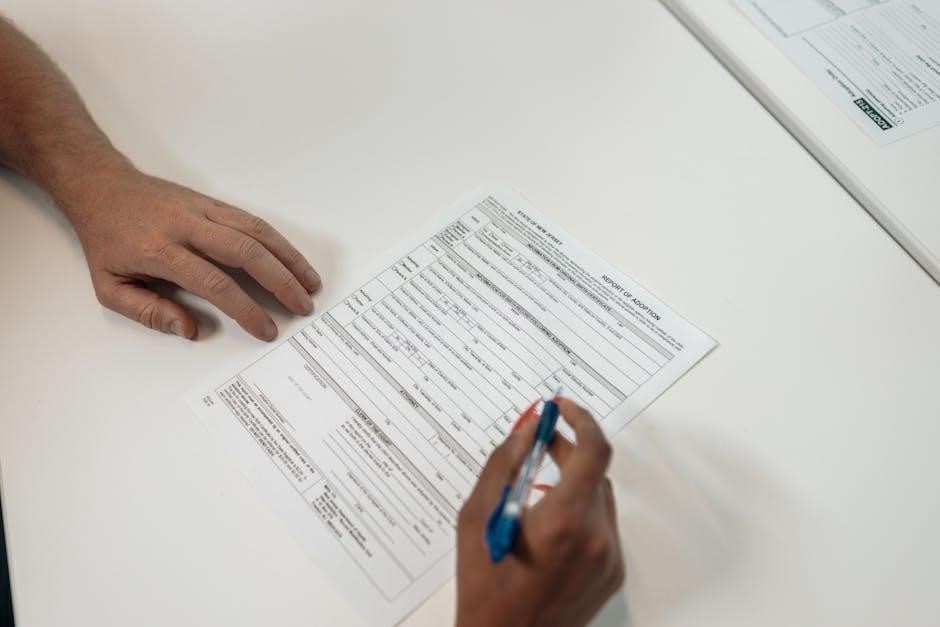
The Declaration and Signature section is a critical component of the Canada Pension death benefit application. This section confirms the accuracy of the information provided and signifies your agreement to the terms and conditions outlined by Service Canada. Carefully read the declaration statement before signing.
You are attesting that all details furnished in the application are true and complete to the best of your knowledge. Providing false or misleading information can lead to penalties or rejection of the claim. The applicant must sign and date the form in the designated area.
If you are authorized to sign on behalf of another person‚ you must also provide proof of that authorization‚ such as a power of attorney. Ensure the signature matches the name printed on the application. A clear and legible signature is essential for processing. This section legally validates your application‚ so attention to detail is paramount.
How to Submit the Completed Application Form
Once you’ve meticulously completed the Canada Pension death benefit application form‚ ensuring all sections are accurate and supported by the required documentation‚ submitting it correctly is crucial. Currently‚ Service Canada primarily accepts applications via mail. Electronic submission is not available at this time.
Do not send original documents unless specifically requested. Photocopies are acceptable for most supporting materials. It’s highly recommended to make a complete copy of the application and all attachments for your records before mailing. This provides proof of submission and the information provided.
Securely package the application to prevent damage during transit. Use a reliable mailing service that offers tracking and delivery confirmation. This allows you to monitor the progress of your application and verify its receipt by Service Canada. Retain the tracking number for future reference. Proper submission ensures efficient processing of your claim.

Mailing Address for Application Submission
To ensure your Canada Pension death benefit application is processed efficiently‚ it must be mailed to the correct address. Service Canada utilizes a centralized processing center for these claims. The designated mailing address‚ as of today‚ April 21‚ 2026‚ is:
Service Canada
Death Benefits Section
P.O. Box 8888
Winnipeg‚ MB R3C 4J4
Please verify this address on the official Canada.ca website (catalogue.servicecanada.gc;ca) before mailing‚ as addresses can occasionally change. Incorrectly addressed applications will experience significant delays in processing. Clearly write the mailing address on the envelope‚ and consider using a pre-printed label to avoid errors.
Include a return address on the envelope in case Service Canada needs to contact you regarding your application. Confirm you have included all required documentation before sealing and mailing the envelope. Accurate addressing is paramount for timely claim processing.
Processing Time for Death Benefit Claims
Understanding the processing time for Canada Pension death benefit claims is crucial for survivors awaiting funds. As of April 21‚ 2026‚ Service Canada estimates processing times to be approximately 6 to 8 weeks from the date they receive a complete application. However‚ this is an estimate and can vary depending on individual circumstances and the volume of claims being processed.
Factors that can cause delays include incomplete applications‚ missing documentation‚ or difficulties verifying information. Regularly check your My Service Canada Account (if applicable) for updates on your claim status. Service Canada does not provide interim payments while a claim is being processed.
If you haven’t received a decision within 10 weeks‚ contacting Service Canada (details in the ‘Contacting Service Canada’ section) is recommended. Be prepared to provide your application reference number. Patience is key‚ but proactive follow-up can be beneficial if delays occur.
Contacting Service Canada for Assistance
If you require assistance with the Canada Pension death benefit application form or have questions about your claim‚ Service Canada offers several contact methods. The primary method is through their dedicated phone line: 1-800-772-7273. Be prepared for potential wait times‚ especially during peak hours. This line is available Monday to Friday‚ 8:30 am to 5:00 pm (Eastern Time).
You can also visit a Service Canada Centre in person; however‚ it’s advisable to check the Canada.ca website for current hours of operation and any appointment requirements. A comprehensive list of centres is available online.
For general inquiries‚ the Service Canada website (Canada.ca) provides a wealth of information‚ including FAQs and helpful guides. Utilizing the online resources can often resolve simple questions quickly. Remember to have your Social Insurance Number (SIN) and application reference number readily available when contacting Service Canada for efficient assistance.
Common Errors to Avoid on the Application Form
Submitting a complete and accurate Canada Pension death benefit application is crucial for timely processing. Several common errors can cause delays or rejection. Ensure all sections are fully completed; leaving fields blank is a frequent mistake. Double-check the deceased’s Social Insurance Number (SIN) for accuracy‚ as even a single digit error can cause issues.
Incorrect bank account details are another common problem. Verify the institution number‚ branch number‚ and account number carefully. Ensure the survivor’s relationship to the deceased is clearly stated and supported by documentation‚ if required. Inconsistencies between the information provided on the form and supporting documents will necessitate clarification.

Failing to provide acceptable proof of death or marriage/common-law status will also delay processing. Review the required documents list thoroughly before submission. Finally‚ ensure the declaration is signed and dated by the appropriate applicant. Careful attention to detail will significantly increase the likelihood of a smooth and efficient claim process.
Resources and Further Information (Canada.ca Links)
Service Canada’s main website offers contact information for assistance‚ including phone numbers and local office locations. These resources are regularly updated to reflect changes in legislation and procedures‚ ensuring you have access to the most accurate and reliable information available.