
Notion simplifies website creation; build resumes, blogs, or handbooks without coding, leveraging its flexible workspace and AI tools for efficient, synced content access.
What are Leather Patterns?
Leather patterns are essentially blueprints for crafting items from leather, dictating the shapes and sizes of the pieces needed. These patterns, increasingly available as PDF downloads, guide leatherworkers through the cutting and assembly process. Notion’s adaptability mirrors this – just as patterns provide structure, Notion offers a flexible workspace. Like building a website with Notion Sites without coding, patterns eliminate guesswork. They range from simple designs for beginners to complex layouts for experienced artisans.
These patterns ensure consistent results and efficient material usage, much like Notion’s AI tools streamline workflows. They are the foundation for creating beautiful and functional leather goods.
Why Use PDF Leather Patterns?
PDF leather patterns offer unparalleled convenience and accessibility, mirroring Notion’s cloud-based access from any web browser. Instant downloads eliminate shipping costs and delays, allowing crafters to start projects immediately. They are easily printable at home, scalable to different sizes, and reusable – a cost-effective solution. Like building a portfolio with Notion Sites, PDF patterns empower self-sufficiency.
Furthermore, the digital format facilitates easy storage and organization. They are compatible with various software for editing and customization, fostering creativity and personalization, much like Notion’s adaptable workspace.
Types of Leather Patterns Available as PDFs
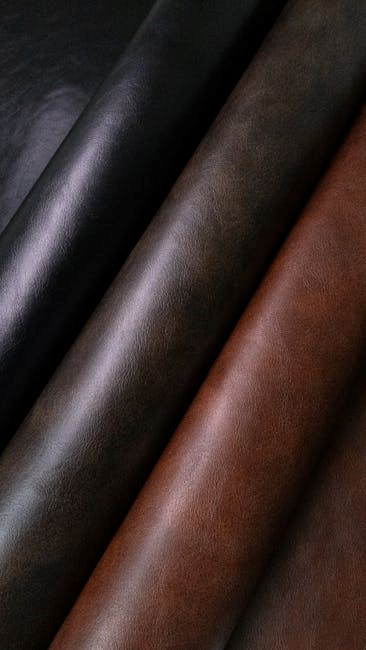
Notion’s versatility extends to diverse content; similarly, PDF leather patterns encompass bags, wallets, belts, armor, clothing – catering to varied skill levels and projects.
Bag & Purse Patterns
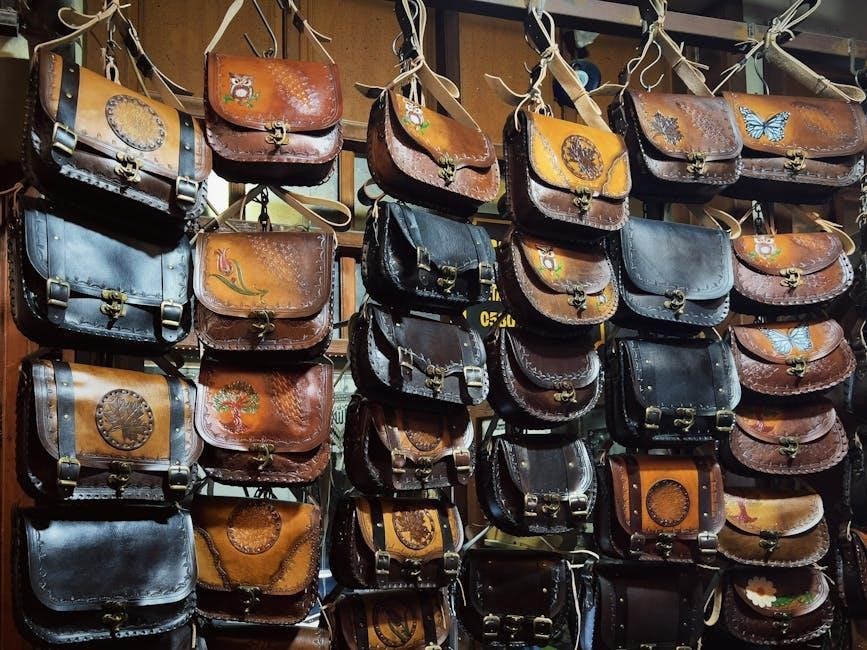
Notion’s adaptable workspace mirrors the range found in bag and purse patterns available as PDFs. These patterns cater to all skill levels, from beginner-friendly totes and simple crossbody bags to complex designs like structured satchels and elegant clutches. PDF formats offer convenience, allowing for easy printing and scaling.
You’ll discover patterns for various styles – hobo bags, backpacks, market totes, and more. Many include detailed instructions, cutting layouts, and stitching guides, simplifying the construction process. The accessibility of these patterns, much like Notion’s web-based access, empowers crafters to create personalized accessories without extensive prior experience.
Wallet & Cardholder Patterns
Notion’s all-in-one workspace parallels the compact nature of wallet and cardholder projects found in PDF leather patterns. These patterns are ideal for utilizing leather scraps and mastering fundamental techniques like edge finishing and stitching. PDF downloads provide instant access to designs ranging from minimalist card sleeves to bi-fold and tri-fold wallets with multiple compartments.
Like building a website with Notion without coding, these patterns often include clear, step-by-step instructions, making them suitable for beginners. You’ll find patterns for coin purses, key wallets, and even more elaborate designs incorporating tooling or embossing, allowing for personalized creations.
Belt Patterns
Notion’s adaptability mirrors the versatility of belt patterns available as PDFs – from simple, straight-forward designs to complex, tooled creations. These patterns cater to all skill levels, offering projects for beginners learning basic cutting and punching techniques, and experienced crafters exploring intricate buckle attachments and decorative elements.
Similar to Notion’s ability to connect work into one space, belt patterns often include guides for hardware selection and placement. PDF formats allow for easy printing and scaling, ensuring a perfect fit. You’ll discover patterns for classic leather belts, exotic leather options, and even braided or woven designs.
Armor & Cosplay Patterns
Notion’s flexible workspace allows for building complex projects, much like the detailed work involved in leather armor and cosplay patterns; PDF formats provide intricate designs for creating realistic and visually stunning pieces, mirroring Notion’s capacity for detailed organization.
These patterns range from simple bracers and pauldrons to full suits of armor inspired by historical or fantasy sources. Like building a Notion site without coding, these patterns often include templates for shaping, tooling, and assembling individual components. Expect detailed instructions for layering, riveting, and finishing, bringing imaginative characters to life.
Clothing Patterns (Jackets, Vests)
Notion’s adaptability mirrors the versatility of leather clothing patterns, offering designs for jackets, vests, and more. PDF patterns provide a convenient way to access these designs, similar to Notion’s cloud-based accessibility from any web browser. These patterns often include detailed cutting layouts and stitching guides, streamlining the creation process.
Expect variations in style, from classic biker jackets to tailored vests, catering to diverse tastes. Like building a portfolio on Notion Sites, these patterns allow for personal expression through leatherworking. Detailed instructions ensure a professional finish, even for beginners.
Finding and Downloading Leather Patterns (PDF)
Notion’s ease of access parallels finding PDF patterns; explore free resources, paid marketplaces, and pattern websites for diverse designs and instant downloads.
Free Leather Pattern Resources
Notion, mirroring the accessibility of free resources, offers a starting point for creators. Just as Notion simplifies web publishing, several online platforms provide complimentary leather patterns in PDF format. These resources are excellent for beginners seeking to hone their skills without initial investment. Websites and online communities frequently share designs for smaller projects like cardholders, keychains, or simple pouches.
However, quality and completeness can vary significantly. Always carefully review the pattern instructions and ensure all necessary pieces are included before commencing a project. Utilizing these free patterns is a fantastic way to experiment with different styles and techniques, building confidence before tackling more complex, paid designs.
Paid Leather Pattern Marketplaces
Notion’s paid plans unlock advanced features, paralleling the benefits of investing in premium leather patterns. Several online marketplaces specialize in professionally designed PDF leather patterns, offering a wider selection and higher quality than free resources. These platforms often feature detailed instructions, cutting layouts, and even video tutorials, streamlining the crafting process.
Popular marketplaces cater to diverse skill levels and project types, from beginner-friendly wallets to intricate bags and cosplay armor. Purchasing patterns supports designers and ensures access to thoroughly tested and refined designs, ultimately leading to more satisfying project outcomes and professional-looking results.
Pattern Websites with PDF Options
Notion, like dedicated pattern websites, provides accessible content. Many leather crafting websites now offer patterns directly as downloadable PDFs, mirroring Notion’s ease of access. These sites often specialize in specific styles – such as minimalist wallets or rugged bags – providing curated collections.
They frequently include detailed photographs and step-by-step instructions, similar to Notion’s visual approach. Some websites also offer pattern bundles or subscriptions, providing cost-effective access to a growing library of designs. Exploring these resources expands creative possibilities and simplifies the pattern acquisition process.
Understanding Leather Pattern Components
Notion blends work apps; similarly, patterns include pieces, layouts, and guides—essential for crafting, mirroring Notion’s all-in-one workspace approach to organization.
Pattern Pieces Identification
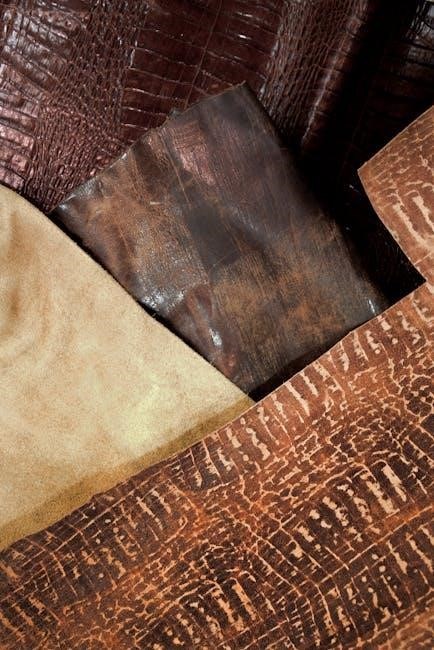
Notion’s adaptable workspace echoes the need to decipher leather pattern components. Each PDF pattern contains individual pieces, clearly labeled with names and numbers – crucial for accurate assembly, much like Notion’s blocks. Identifying these pieces is the first step; look for corresponding markings on both the pattern itself and the cutting layout guide.
Understanding grain direction arrows is vital, ensuring leather strength aligns with the finished product’s stress points. Mirror images are common, requiring careful attention to avoid errors. Like Notion pages syncing across devices, each piece must be correctly identified for a cohesive final result. Proper identification prevents costly mistakes and ensures a professional finish.
Cutting Layout Guides
Notion’s ability to organize content mirrors the function of cutting layout guides in PDF leather patterns. These guides demonstrate the most efficient arrangement of pattern pieces onto your leather hide, minimizing waste – a key aspect of resourcefulness. They often indicate grain direction, crucial for leather’s durability, similar to Notion’s emphasis on structured workflows.
Layouts consider leather imperfections and stretch, optimizing piece placement. Following these guides saves leather and ensures all necessary components fit. Like building a Notion workspace, careful planning is essential. Variations exist based on hide size; adapt accordingly for optimal results and a streamlined crafting process.
Instructions & Stitching Guides
Notion’s all-in-one workspace parallels the comprehensive nature of instructions and stitching guides within PDF leather patterns. These guides detail each step, from preparing leather to final assembly, much like Notion connects workflows. Clear diagrams and written explanations are vital for successful projects, mirroring Notion’s focus on clarity.
Stitching guides specify stitch length, thread type, and techniques. They ensure structural integrity and aesthetic appeal. Like Notion’s adaptable templates, guides may vary based on skill level. Following them precisely yields professional results, transforming raw materials into a finished product, a testament to careful planning.

Tools & Materials for Working with PDF Leather Patterns
Notion, accessible via web browsers, reflects the need for readily available tools; leatherwork requires printers, cutting tools, and Notion’s adaptable workspace.
Printing & Scaling Patterns
Notion emphasizes accessibility, mirroring the importance of accurate pattern printing for leatherwork. PDF patterns must be printed at 100% scale to maintain correct dimensions; verify this setting before printing. A test square is often included on the pattern to confirm accurate scaling after printing. If scaling is off, adjustments are crucial to avoid ill-fitting projects.
Consider using a professional print service for larger patterns or if your home printer lacks precision. Proper scaling ensures pattern pieces align correctly during cutting and assembly, ultimately impacting the final product’s quality and appearance. Notion’s adaptable nature reflects the need for precision in all creative endeavors.
Transferring Patterns to Leather
Notion’s collaborative features echo the need for clear pattern transfer onto leather. Several methods exist, including tracing directly with a stylus or using carbon paper. For precise transfers, consider pattern weights to hold pieces securely in place while tracing. Alternatively, adhere the pattern pieces directly to the leather using temporary spray adhesive.

Accuracy is paramount; ensure lines are crisp and clear. The chosen method should suit the leather type and pattern complexity. A well-transferred pattern is foundational for accurate cutting and a professional-looking finished product, mirroring Notion’s focus on streamlined workflows.
Essential Leatherworking Tools
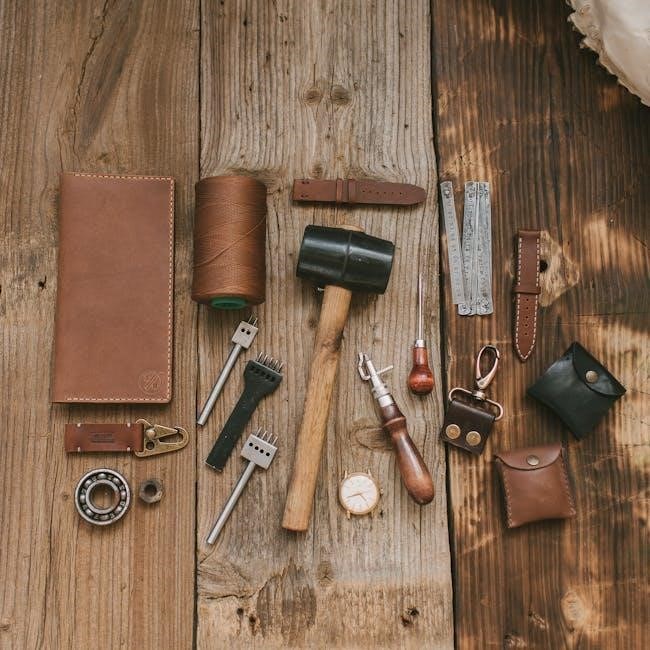
Notion’s all-in-one workspace parallels the need for a comprehensive toolkit in leathercraft. Core tools include a sharp cutting knife (like a rotary cutter), a steel ruler for straight lines, and a cutting mat to protect surfaces. Essential for marking patterns are awls for creating stitch holes and edge bevelers for refined edges.
Stitching requires needles, thread, and potentially a stitching pony. Finishing demands tools like edge paint, burnishers, and dyes. Investing in quality tools, much like Notion’s premium features, enhances both efficiency and the final product’s quality.
Working with PDF Leather Patterns: A Step-by-Step Guide
Notion streamlines workflows; similarly, leatherworking involves preparing patterns, precise cutting, and careful assembly—mirroring Notion’s focus on organized, efficient task completion.
Preparing the Pattern for Cutting
Notion’s adaptability reflects the preparation needed for leather patterns. First, accurately print your PDF pattern, ensuring correct scaling – crucial for a well-fitting final product. Verify measurements against a ruler. Next, carefully transfer the pattern pieces onto your chosen leather. Consider grain direction for optimal strength and aesthetics, much like organizing content within Notion.
Use a suitable tracing tool, like a stylus or tracing wheel, to clearly mark the outlines. Double-check all markings before cutting, as errors can be costly. Proper preparation, like Notion’s structured approach, minimizes mistakes and maximizes efficiency throughout the leatherworking process.
Cutting the Leather Pieces
Notion’s seamless integration mirrors the precision required when cutting leather. Employ a sharp cutting tool – a rotary cutter or a sturdy craft knife – and a self-healing cutting mat to protect your work surface. Cut outside the traced lines initially, gradually refining the edges for accuracy, similar to iteratively improving a Notion page.
Maintain consistent pressure and a smooth motion. For intricate curves, make multiple shallow passes rather than forcing the blade. Accuracy at this stage is paramount; clean cuts contribute significantly to the final product’s quality, just as clear organization enhances a Notion workspace.
Assembling and Stitching the Leather
Notion’s collaborative features echo the assembly process; carefully align leather pieces, mirroring how elements connect within a Notion database. Utilize a leather adhesive for temporary bonding before stitching, ensuring precise alignment. Employ a saddle stitch for durability – a technique requiring patience and consistency, much like building a complex Notion workflow.
Maintain even stitch length and tension. Backstitch at the beginning and end of each seam to secure the stitches. Regularly check alignment as you progress, ensuring a clean and professional finish, reflecting Notion’s polished interface.

Advanced Techniques for Leather Patterns
Notion empowers customization; modify patterns like adjusting Notion pages, employing tooling, embossing, and dyeing for unique leather finishes, mirroring Notion’s adaptability.
Pattern Modification & Customization
Notion’s flexibility extends to pattern adjustments, much like editing a Notion page. Scaling PDF patterns accurately is crucial, mirroring Notion’s synced content. Altering designs requires understanding pattern pieces and their interrelation. Consider adding gussets for volume, lengthening straps, or changing pocket placements – all achievable with careful planning.
Digital editing software, similar to Notion’s AI tools, allows precise modifications before cutting. Remember to test changes with inexpensive material first. Customization isn’t limited to size; explore unique shapes and decorative elements. Embrace creativity, but prioritize structural integrity, ensuring the final product functions as intended, just like a well-structured Notion workspace.
Tooling & Embossing Techniques
Notion streamlines workflows, and tooling/embossing enhance leather’s aesthetic, similar to adding badges & certifications to a Notion profile. Basic tooling involves using stamps and mallets to create impressions. Embossing raises the leather surface, adding dimension. These techniques require specialized tools – stamps, bevelers, and modeling tools – mirroring Notion’s diverse feature set.
Practice on scrap leather first to master pressure and technique. Consider the pattern’s design when choosing tooling motifs. Like building a Notion site, careful planning is key. Finishing with dyes and sealants protects the design and enhances its visual appeal, creating a polished, professional result.
Dyeing & Finishing Leather
Notion’s adaptability mirrors leather’s transformative potential through dyeing and finishing. Dyeing imparts color, while finishing protects and enhances the leather’s appearance – akin to polishing a Notion workspace for clarity. Various dyes exist: alcohol-based for vibrant hues, oil-based for rich tones. Application methods include sponging, spraying, and hand-rubbing.
Finishes range from waxes and creams for a natural look to acrylics for durability. Proper preparation is crucial; clean the leather thoroughly before dyeing. Like Notion’s syncing, consistent application ensures even color. Sealants protect against wear and tear, completing the process.
Software for Editing & Creating Leather Patterns
Notion, with its AI tools and flexible workspace, streamlines workflows – mirroring how software aids in designing and modifying leather patterns efficiently.
Adobe Illustrator for Pattern Design
Adobe Illustrator stands as an industry-standard vector graphics editor, exceptionally suited for crafting precise leather patterns. Its capabilities extend beyond simple shapes, allowing for intricate designs and seamless pattern tiling – crucial for efficient leather usage. Like Notion’s adaptable workspace, Illustrator offers flexibility, though with a steeper learning curve.
The software’s precision ensures accurate scaling and modification, vital when working with PDF patterns. Designers can easily adjust seam allowances, add tooling details, and create variations. Illustrator integrates well with other Adobe products, streamlining the design-to-production workflow. It’s a powerful tool for both beginners and experienced leatherworkers seeking professional-quality results, mirroring Notion’s ability to cater to diverse user needs.
Inkscape (Free Alternative)
Inkscape presents a robust, open-source vector graphics editor, serving as a compelling, cost-free alternative to Adobe Illustrator for designing leather patterns. Similar to Notion’s accessibility, Inkscape lowers the barrier to entry for aspiring designers. While it may lack some of Illustrator’s advanced features, it provides a comprehensive toolkit for creating and modifying patterns.
Users can generate precise shapes, manipulate paths, and export designs in formats compatible with PDF leather patterns. Inkscape’s community support and extensive tutorials aid in learning the software. It’s an excellent choice for hobbyists or those seeking a powerful design solution without the subscription cost, embodying Notion’s spirit of adaptable functionality.
CAD Software for Leatherwork
CAD (Computer-Aided Design) software represents the professional echelon of leather pattern creation, offering unparalleled precision and efficiency, much like Notion’s streamlined workspace. Specialized CAD programs for leatherwork allow designers to develop complex patterns, automate cutting layouts, and integrate with machinery for production.
These tools often feature parametric design capabilities, enabling easy adjustments and customization. While typically requiring a steeper learning curve and investment, CAD software delivers significant advantages for businesses and serious leatherworkers. They facilitate intricate designs and optimize material usage, mirroring Notion’s focus on smarter workflows and capability.
Resources and Communities for Leather Pattern Enthusiasts
Notion fosters collaboration; similarly, online forums, blogs, and social media connect leatherworkers, sharing knowledge and inspiration for pattern design and techniques.
Online Forums & Groups
Notion’s collaborative spirit mirrors the value found in online leatherworking communities. These platforms, much like Notion’s workspace, connect enthusiasts globally, offering spaces to share projects, ask questions, and receive feedback on pattern modifications. Forums become digital workshops where detailed discussions about tooling, dyeing, and stitching techniques flourish. Groups centered around specific leathercraft styles – bag making, armor creation, or wallet design – provide focused learning environments.
Active participation allows access to a wealth of knowledge, troubleshooting assistance, and inspiration from fellow crafters. Many forums host pattern exchange sections, expanding available resources beyond paid marketplaces. These communities are invaluable for both beginners seeking guidance and experienced leatherworkers looking to refine their skills.
Leatherworking Blogs & Websites
Notion, as a central hub for information, parallels the role of dedicated leatherworking blogs and websites. These online resources, similar to Notion pages, curate valuable content – tutorials, project showcases, and pattern reviews. Many skilled leatherworkers maintain blogs detailing their process, offering insights into pattern adaptation and advanced techniques. Websites often feature downloadable resources, including free patterns or guides to enhance skills.
These platforms serve as continuous learning tools, providing inspiration and practical advice. They frequently link to pattern marketplaces and forums, creating a connected ecosystem for leathercraft enthusiasts; Regularly visiting these sites keeps crafters updated on new trends and tools.
Social Media Communities
Notion’s collaborative spirit mirrors the dynamic nature of social media communities dedicated to leatherworking. Platforms like Instagram, Facebook, and dedicated forums foster connection and knowledge sharing, much like a shared Notion workspace. Crafters showcase projects, request feedback on patterns, and participate in challenges.
These communities are excellent for discovering new designers and pattern resources. Many pattern creators actively engage with followers, offering support and answering questions. Social media provides a visual platform for inspiration and a quick way to stay current with industry trends, mirroring Notion’s real-time syncing.