
Lakshmi Ashtothram, available as a PDF download, is a sacred hymn containing 108 names of Goddess Lakshmi. It’s a powerful tool for devotees seeking blessings.
Numerous online resources offer the Lakshmi Ashtothram in PDF format, facilitating easy access for recitation and worship. Explore these digital offerings today!
Sri Lakshmi Ashtothram Satnama Stotram by Koganti Sitaramacharya is a popular version, readily downloadable for personal spiritual practice and devotion.
What is Lakshmi Ashtothram?
Lakshmi Ashtothram is a revered Hindu stotram, a hymn consisting of 108 sacred names dedicated to Goddess Lakshmi, the deity of wealth, prosperity, and auspiciousness.
Often found as a readily available PDF document for convenient access, it’s a compilation of epithets describing Lakshmi’s various forms and qualities. This stotram, like the Sri Lakshmi Ashtothram Satnama Stotram, is chanted to invoke her divine blessings.
The PDF versions allow devotees to easily follow the Sanskrit verses and English translations, aiding in focused and meaningful recitation.
Significance of Chanting
Chanting the Lakshmi Ashtothram, easily accessible via PDF downloads, is believed to bestow immense spiritual and material benefits. Regular recitation is said to remove obstacles, attract wealth, and foster inner peace.
Devotees utilize PDF versions for accurate pronunciation and understanding of the 108 names. The practice cultivates devotion and strengthens the connection with Goddess Lakshmi, leading to overall well-being.
Consistent chanting, guided by a PDF text, is considered a powerful sadhana (spiritual practice) for prosperity and fulfillment.

Understanding the Structure of the Ashtothram
The Lakshmi Ashtothram consists of 108 sacred names, often found in PDF format. These names are meticulously organized for effective recitation and spiritual benefit.
PDF versions typically present the names sequentially, aiding in memorization and proper chanting during puja or daily practice.
The 108 Names
Lakshmi Ashtothram’s core lies in its 108 names, each representing a unique aspect of Goddess Lakshmi. These names, readily available in PDF documents, detail her qualities and powers.
Common names like Prakruti, Vikruti, Vidya, and Sarvabhutahita Pradayai are frequently listed. PDF versions often include transliteration and meanings, enhancing understanding. Reciting these names, found in downloadable PDFs, is believed to invoke Lakshmi’s blessings for prosperity and well-being.
Organization and Recitation
The Lakshmi Ashtothram, often accessed via PDF, typically presents the 108 names sequentially. Many PDF versions include a structured format for easy recitation during puja or daily practice.
Recitation often involves chanting each name followed by “Namaha.” Downloadable PDFs may offer guidance on proper pronunciation. Consistent recitation, guided by a PDF text, is believed to amplify the spiritual benefits and invoke Lakshmi’s grace.
Benefits of Reciting Lakshmi Ashtothram
Reciting the Lakshmi Ashtothram, easily found as a PDF, bestows financial prosperity and spiritual growth. It’s a pathway to Goddess Lakshmi’s blessings!
Consistent chanting, using a PDF guide, can address difficulties and promote overall well-being, fostering a life filled with abundance and peace.
Financial Prosperity
Lakshmi Ashtothram, conveniently accessible as a PDF, is profoundly linked to attracting wealth and abundance. Regular recitation, guided by the PDF text, is believed to remove financial obstacles.
Devotees often chant this hymn specifically when facing economic hardship, seeking Goddess Lakshmi’s intervention. The 108 names, detailed in the PDF, invoke blessings for increased income, business success, and overall financial stability. It’s a powerful practice for manifesting prosperity!
Spiritual Growth
Beyond material benefits, the Lakshmi Ashtothram – easily found as a PDF – fosters deep spiritual evolution. Consistent recitation, using the PDF as a guide, cultivates devotion and inner peace.
Chanting these 108 names purifies the mind, reduces ego, and strengthens one’s connection with the divine. The PDF facilitates focused worship, leading to self-realization and a heightened sense of spiritual awareness. It’s a path to inner transformation!

Accessing Lakshmi Ashtothram Resources
Numerous websites provide the Lakshmi Ashtothram as a free PDF download. Easily access and print this sacred text for daily practice and devotion!
Explore online platforms for various PDF versions, including those with English translations, to enhance your understanding and recitation experience.
Availability of PDF Versions
Lakshmi Ashtothram PDF versions are widely accessible online, catering to devotees’ convenience. Several websites and digital libraries host downloadable files, offering options in various formats and layouts.
You can find versions created by Koganti Sitaramacharya, alongside those featuring English transliterations and translations. These PDFs often include the 108 names with meanings, facilitating a deeper understanding during recitation and puja.
Ensure you download from reputable sources to guarantee accuracy and quality of the text.
Online Resources and Websites
Numerous websites provide access to the Lakshmi Ashtothram, often offering PDF downloads. Platforms dedicated to Hindu scriptures and devotional content frequently host this sacred text.
Explore sites specializing in stotras and mantras for reliable versions. Some resources also feature audio recitations alongside the text, aiding correct pronunciation.
Always verify the source’s authenticity before downloading to ensure the accuracy of the Lakshmi Ashtothram PDF and its transliteration.

Key Names and Their Meanings
Lakshmi Ashtothram’s PDF reveals names like Prakruti (nature) and Vikruti (manifestation). Understanding these meanings deepens devotion and unlocks spiritual insights.
Vidya (knowledge) and Sarvabhutahita Pradayai (bestower of well-being) highlight Lakshmi’s nurturing aspects, readily available in the downloadable text.
Prakruti and Vikruti
Lakshmi Ashtothram PDF versions consistently feature ‘Prakruti’ and ‘Vikruti’ among the initial names. ‘Prakruti’ signifies the primordial nature, the fundamental source of creation, embodying the unmanifested potential.
Conversely, ‘Vikruti’ represents the manifested form, the evolution of Prakruti into the diverse world we perceive. These names, readily found within the downloadable PDF, symbolize the dynamic interplay between the unmanifest and the manifest, crucial to understanding Lakshmi’s cosmic role.
Vidya and Sarvabhutahita Pradayai
Within the Lakshmi Ashtothram PDF, ‘Vidya’ is prominently featured, denoting knowledge, wisdom, and the illuminating power of learning. It signifies Lakshmi as the embodiment of sacred knowledge, granting discernment and spiritual insight.
Following closely is ‘Sarvabhutahita Pradayai,’ meaning “bestower of benefit to all beings.” This name, easily located in any PDF version, highlights Lakshmi’s compassionate nature and universal benevolence.
How to Perform Lakshmi Ashtothram Puja
A Lakshmi Ashtothram PDF guides the puja process. Preparation involves a clean space and offerings. Recite the 108 names with devotion for blessings!
Downloadable PDF versions often include detailed steps for a successful Lakshmi Puja, enhancing your spiritual practice and connection with the Goddess.
Preparation for Puja
Before commencing Lakshmi Ashtothram Puja, download a reliable PDF version for accurate recitation. Cleanse the puja space thoroughly, creating a serene atmosphere. Gather essential items like flowers, incense, and a lamp.
Prepare a small altar adorned with a Lakshmi image or yantra. Ensure you have a comfortable seat for prolonged chanting. Having the PDF readily available minimizes interruptions and fosters focused devotion. A calm mind and pure intentions are paramount for a fruitful puja.
The Recitation Process
With your Lakshmi Ashtothram PDF in hand, begin by invoking Goddess Lakshmi. Recite each of the 108 names slowly and clearly, focusing on the meaning. Offer flowers or a small offering after each recitation, if desired.
Maintain a consistent rhythm and sincere devotion throughout. Visualize Goddess Lakshmi’s presence during the chanting. Conclude with a prayer for blessings and gratitude. Repeat the process for maximum benefit.
Lakshmi Ashtothram in Different Languages
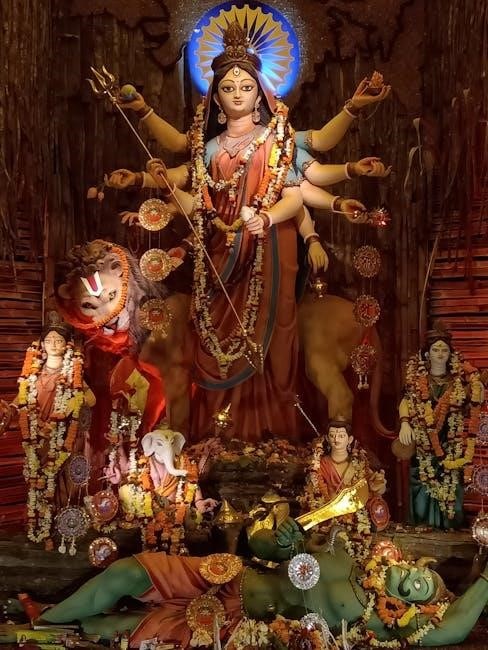
While originating in Sanskrit, Lakshmi Ashtothram PDF versions often include English translations. This allows wider accessibility for devotees unfamiliar with the original language.
Finding translated PDFs simplifies recitation and understanding of the 108 sacred names of Goddess Lakshmi for a global audience.
Sanskrit Origins
Lakshmi Ashtothram’s roots lie deeply embedded in ancient Sanskrit texts, representing a traditional Hindu devotional practice. The original PDF versions and scriptures are composed entirely in Sanskrit, preserving the hymn’s sacred linguistic form.
These Sanskrit verses, detailing the 108 names, are considered highly potent and are often chanted phonetically for maximum spiritual benefit. Accessing a Sanskrit PDF allows for authentic recitation and deeper connection to the divine.
The precise origins and authorship remain debated, but the hymn’s enduring presence in Sanskrit literature confirms its historical significance.
English Translations
While the original Lakshmi Ashtothram is in Sanskrit, numerous English translations are readily available as PDF downloads. These translations aim to make the hymn accessible to a wider audience, facilitating understanding of each name’s meaning.
Many PDF resources provide both the Sanskrit verses and their corresponding English interpretations, allowing for comparative study and accurate pronunciation. Shri Lakshmi ashtottara shatanamavali is often translated.
However, translations can vary, so choosing a reputable source for your PDF is crucial for accurate comprehension and devotional practice.
The Connection to Goddess Lakshmi
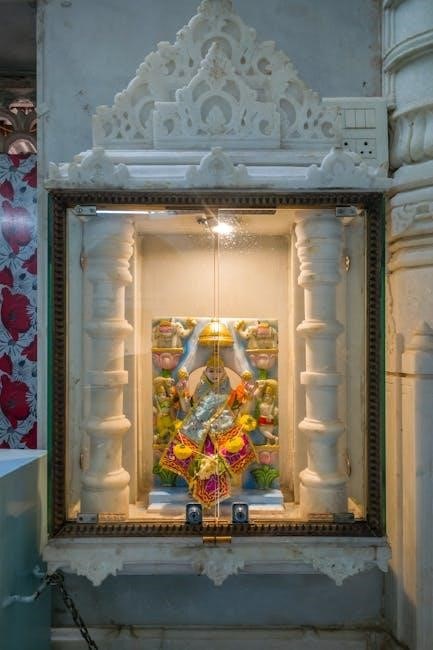
Lakshmi Ashtothram, often found as a PDF, directly invokes Goddess Lakshmi, the deity of wealth and prosperity. Reciting it fosters a deeper connection.
Each of the 108 names within the PDF highlights Lakshmi’s various attributes and blessings, enhancing devotion and spiritual growth.
Lakshmi’s Attributes
Lakshmi Ashtothram, readily available as a PDF, beautifully illustrates Goddess Lakshmi’s multifaceted attributes. The 108 names reveal her as the embodiment of wealth, prosperity, purity, and beauty.
Names like Prakruti and Vikruti, found within the PDF text, signify her creative and dynamic energies. Further, Vidya represents her as knowledge itself, while Sarvabhutahita Pradayai highlights her compassion for all beings.
Studying these attributes through the PDF deepens understanding and devotion.
Lakshmi’s Role in Hinduism
The Lakshmi Ashtothram, often accessed as a convenient PDF, underscores Goddess Lakshmi’s central role in Hinduism. She is revered as the divine consort of Vishnu and the bestower of fortune, both material and spiritual.
Reciting the 108 names detailed in the PDF is believed to invoke her blessings for prosperity and well-being.
Her presence is essential for cosmic balance, and the PDF serves as a guide to connect with this powerful deity.

Variations of Lakshmi Ashtothram
Different schools offer unique Lakshmi Ashtothram PDF versions. Regional variations exist, impacting recitation styles and included names, enriching devotional practices.
Exploring diverse PDF texts reveals subtle differences, reflecting varied traditions and interpretations of Goddess Lakshmi’s divine attributes;
Different Schools of Thought
Lakshmi Ashtothram PDF versions can vary based on the philosophical school. Some traditions emphasize specific names or sequences, reflecting their unique understanding of Lakshmi’s energies.
Vaishnava and Shaiva schools, for example, might present slightly different arrangements within the 108 names. These variations aren’t contradictions, but rather nuanced expressions of devotion.
Scholars have compiled and annotated different PDF editions, highlighting these subtle distinctions and offering insights into the historical development of the stotram.
Regional Differences
Lakshmi Ashtothram PDF availability and recitation styles exhibit regional variations across India. South Indian traditions often feature elaborate puja rituals accompanying the stotram’s chanting.
Conversely, North Indian practices might prioritize simpler recitation formats. Different PDF versions may reflect these localized customs, including variations in transliteration and pronunciation.
Accessing regionally specific PDFs can enrich your understanding and connect you with the unique devotional expressions of different communities honoring Goddess Lakshmi.

Downloading and Printing Lakshmi Ashtothram PDF
Numerous websites offer Lakshmi Ashtothram PDF files for free download. Ensure you choose reliable sources for clear print quality and accurate text!
Printing allows convenient offline access for daily recitation and puja practices, enhancing your spiritual connection with Goddess Lakshmi.
Finding Reliable Sources
Finding trustworthy sources for your Lakshmi Ashtothram PDF is crucial. Prioritize websites associated with reputable temples, spiritual organizations, or established publishers like Sri Satyanarayana & Co.
Beware of sites with excessive advertisements or unclear origins. Look for PDF versions that are clearly formatted, free of errors, and ideally, offer a Sanskrit transliteration alongside English translations. Cross-reference with multiple sources to verify accuracy before printing or regular use.
Print Quality and Format
When printing your Lakshmi Ashtothram PDF, opt for a laser printer for sharper text and longevity. Ensure the font size is legible – ideally 12pt or larger – for comfortable recitation.
Choose a paper weight suitable for frequent handling. A single-page format is often preferred over booklet style for ease of use during puja. Consider color printing for aesthetic appeal, but black and white is perfectly acceptable.

Lakshmi Ashtothram and Mantras
Lakshmi Ashtothram, often found as a PDF, complements mantras like the Sri Suktam. Combining recitation with puja amplifies spiritual benefits and divine grace.
Complementary Mantras
Lakshmi Ashtothram, easily accessible as a PDF, synergizes beautifully with powerful mantras dedicated to Goddess Lakshmi. The Sri Suktam, a hymn praising Lakshmi, is frequently recited alongside the Ashtothram to enhance its effects.
Other complementary mantras include the Lakshmi Gayatri mantra and the Bija mantra “Shreem.” These mantras, when chanted with devotion before or after reciting the Lakshmi Ashtothram (available in PDF format), deepen the spiritual connection and amplify the blessings received.
Combining with Other Pujas
The Lakshmi Ashtothram, conveniently found as a PDF download, is often integrated into larger Lakshmi Puja ceremonies. Reciting the 108 names enhances the overall potency of the puja, attracting wealth and prosperity.
It’s commonly combined with offerings like flowers, incense, and sweets. Performing the Lakshmi Ashtothram alongside Kubera Puja – dedicated to the god of wealth – is also beneficial, as detailed in many PDF guides available online.
Common Mistakes to Avoid During Recitation
When using a Lakshmi Ashtothram PDF, ensure correct pronunciation of the 108 names. Avoid skipping names or reciting them in the wrong sequence for optimal results.
Pronunciation Errors
Using a Lakshmi Ashtothram PDF is helpful, but accurate pronunciation is crucial. Many names contain Sanskrit sounds unfamiliar to some, leading to errors. Mispronouncing names diminishes the hymn’s power.
Refer to audio recitations alongside the PDF to learn correct pronunciations. Pay close attention to the ‘ra’ and ‘la’ sounds, often mispronounced. Consistent, correct articulation enhances the spiritual benefits of reciting the 108 names.
Incorrect Sequence
While a Lakshmi Ashtothram PDF provides the names, reciting them in the correct order is vital. The sequence isn’t arbitrary; it’s a carefully constructed arrangement for maximum spiritual impact.
Deviating from the established order, even with a PDF in hand, can disrupt the hymn’s energy flow. Follow the sequence precisely as presented in authentic texts to unlock the full benefits of this powerful practice.
The Historical Context of Lakshmi Ashtothram
Lakshmi Ashtothram’s origins are ancient, with authorship debated. PDF versions reflect evolving traditions, showcasing its enduring relevance throughout Hindu history and devotion.
Origins and Authorship
Lakshmi Ashtothram’s precise origins remain somewhat obscure, lost in the mists of time. While definitive authorship is unknown, the hymn’s structure suggests a traditional Vedic foundation. Many PDF versions credit Koganti Sitaramacharya with a popular compilation.
However, the core names likely predate this, drawing from ancient scriptures and devotional practices. Accessing PDF copies allows study of variations, hinting at regional and temporal influences on its development.
Scholars believe it evolved through oral tradition before being codified into written form, now widely available as downloadable PDF documents.
Evolution Over Time
Initially transmitted orally, the Lakshmi Ashtothram gradually transitioned to written form, becoming accessible through manuscripts and, later, PDF documents. Different schools of thought influenced variations in recitation and interpretation.
The availability of PDF versions has accelerated its global spread, fostering diverse devotional practices. Regional adaptations emerged, enriching the hymn’s cultural context.
Modern PDF compilations often include transliterations and translations, making it accessible to a wider audience, demonstrating its enduring evolution.
Lakshmi Ashtothram for Specific Needs
Lakshmi Ashtothram, easily found as a PDF, aids in overcoming financial hardship and seeking overall well-being through dedicated recitation and devotion.
Downloadable PDF versions support focused worship for specific intentions, amplifying the hymn’s positive influence on one’s life and prosperity.
Addressing Financial Difficulties
Lakshmi Ashtothram, conveniently accessible as a PDF, is traditionally recited to alleviate financial burdens and attract prosperity. Consistent chanting, utilizing a downloaded PDF for ease of access, is believed to invoke Goddess Lakshmi’s blessings.
Devotees facing economic challenges often turn to this hymn, finding solace and hope in its verses. The PDF format allows for regular, focused recitation, strengthening faith and fostering a positive mindset conducive to financial recovery and abundance.
Seeking Overall Well-being
Beyond financial gains, the Lakshmi Ashtothram – easily found as a PDF download – promotes holistic well-being. Regular recitation, guided by the PDF text, is believed to foster inner peace, harmony, and spiritual growth.
This practice isn’t solely about material prosperity; it’s a pathway to a balanced and fulfilling life. Accessing the Lakshmi Ashtothram PDF supports consistent devotion, cultivating positive energy and overall life enrichment.